
The first month is a blur. You’re figuring out life with a newborn, your baby is adjusting to the world outside the womb, and everyone’s running on caffeine and adrenaline. Having a rough guide for feeding, sleep, and milestones can take the edge off and help you feel a little more grounded.
Every baby is different, but here’s what most 1-month-olds are doing.
Feeding at 1 Month
Nursing: Most babies nurse 8 to 12 times per day, about every 2 to 3 hours. Sessions can take 20–40 minutes since they’re still learning to feed efficiently.
Pumped milk or formula: Whether you’re pumping breast milk or using formula, babies usually take 2 to 4 oz per feeding, about 6 to 8 times per day. Total intake typically lands around 18 to 24 oz per day.
Signs your baby is eating enough: Steady weight gain, 6 or more wet diapers a day, and consistent dirty diapers.
Don’t stress if your baby wants to cluster feed in the evenings. It’s common at this age and usually helps them sleep a little longer at night.
Sleep at 1 Month
Total sleep: Around 14 to 17 hours in 24 hours.
Day vs. night: Sleep still comes in chunks, usually 2–4 hours at a time. Some babies will start giving you one longer stretch at night (hello, 4 hours).
Naps: Expect 4 to 6 naps a day, but they won’t be predictable yet.
Don’t worry about strict schedules now. Watch your baby’s cues, they’ll guide you.
Wake Windows at 1 Month
Wake windows are short right now.
Average wake window: 45 to 60 minutes before your baby needs to sleep again.
This includes feeding, diaper changes, and a tiny bit of “play.”
Developmental Milestones at 1 Month
At one month, milestones are subtle but exciting:
Lifting their head briefly during tummy time. Tummy time counts even if they’re lying on your chest or stomach. It doesn’t have to be fancy floor sessions yet. My favorite playmat for tummy time is the Lovevery one.
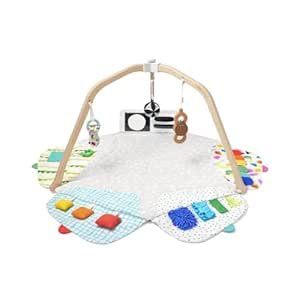
LOVEVERY The Play Gym
- Stage-based developmental activities
- Award-winning design
- Grows with baby to toddler
The perfect play gym for tummy time and beyond. Features multiple developmental zones that adapt as your baby grows. High-quality materials and thoughtfully designed activities make this worth the investment.
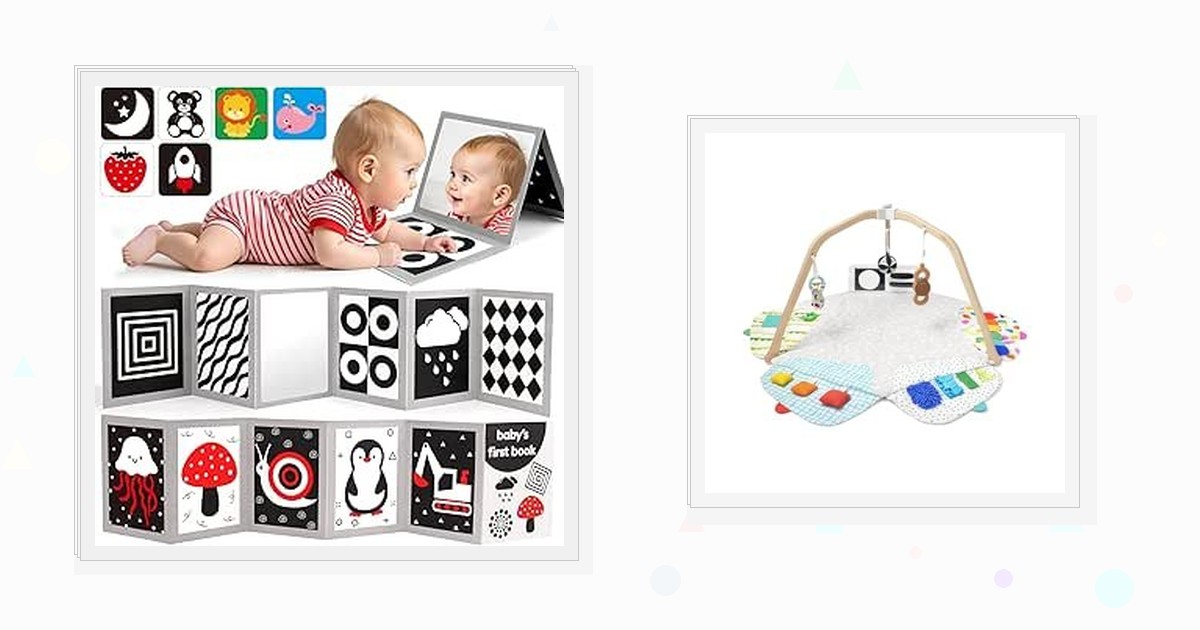
Focusing on faces and high-contrast objects. Babies see high-contrast images best. Our baby is obsessed with this set — we have the flash cards taped to the wall next to baby’s changing table (game changer) and she babbles to them all of the time.
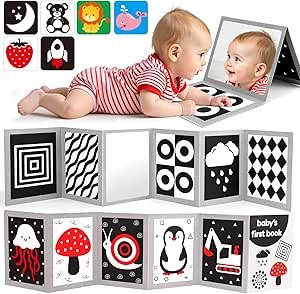
Black and White High Contrast Baby Books Flash Cards
- High-contrast black and white designs
- Flash cards and tummy time mirror
- Brain development and sensory stimulation
Perfect for newborns 0-6 months. These high-contrast cards help with visual development and provide engaging tummy time entertainment. Tape them to the wall near the changing table for instant entertainment.
Responding to voices. Narrate what you’re doing (“We’re putting on your pajamas”) so they get used to the sound and rhythm of your voice. We also did a lot of “house tours” showing baby “this is the dining room, this is the kitchen, etc.”
Making newborn sounds. Little coos, grunts, and cries are their way of communicating with you.
Sample Day for a 1-Month-Old
Here’s a rough outline of what a day might look like (though newborns love to keep it unpredictable):
- Feeds every 2–3 hours (nursing, pumped milk, or formula).
- Nap after 45–60 minutes of wake time.
- Total of 14–17 hours of sleep split between day and night.
- 2–4 oz per feed if taking pumped milk or formula. Total intake around 18 to 24 oz per day
Final Thoughts
The first month felt like survival mode. I tracked every ounce, every wet diaper, every nap — half for peace of mind and half because I couldn’t remember what happened 30 minutes earlier. As a Type A perfectionist, I thought I could control it all with the right schedule or tracker. But babies don’t run on perfect plans, and parenthood is a crash course in letting go. Once I stopped obsessing over every detail and leaned into the messy, unpredictable rhythm of newborn life, things actually felt lighter.