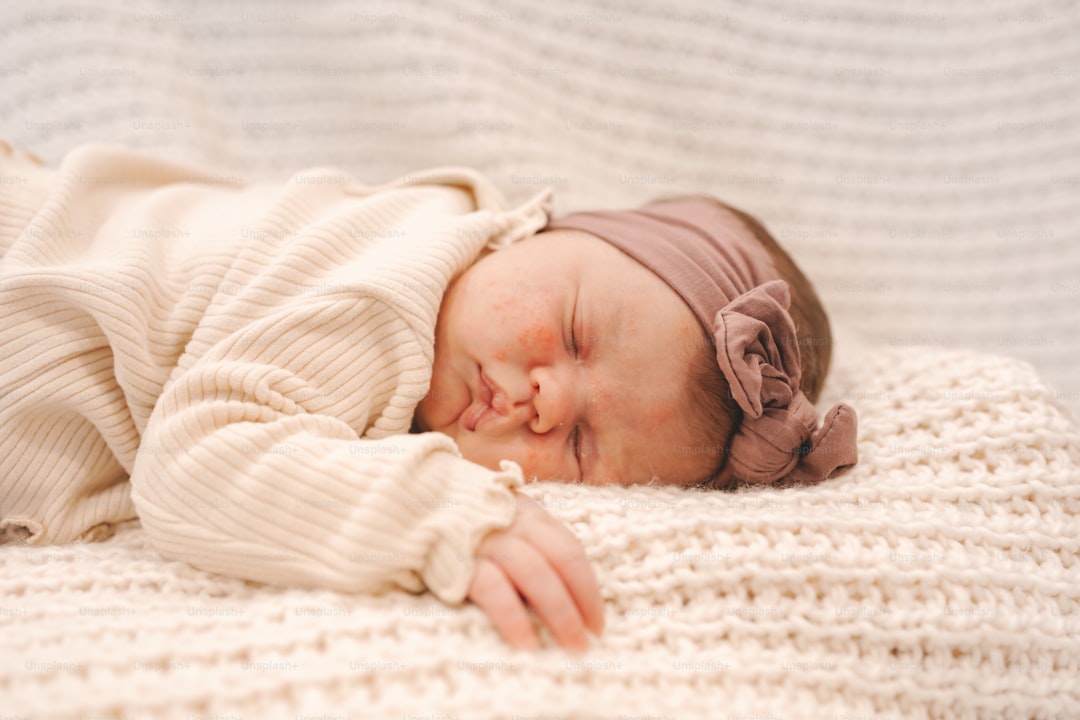
Around week three, my baby’s skin went from that soft newborn glow to… a full breakout.
Red bumps. Tiny whiteheads. It happened quickly and spread faster than I expected.
If you’re here because your 2–4 week old suddenly looks like they have teenage acne, take a breath. We were there too.
Here’s exactly what ours looked like, how long it lasted, what we chose not to try (despite Reddit and TikTok opinions), and what our pediatrician actually recommended.
What Baby Acne Looked Like for Us
Ours started right around week 3.
It didn’t show up everywhere at once. It progressed:
- First around her eyes
- Then across her cheeks
- Then her forehead
- Then a bit on her chin
It looked:
- Red and bumpy
- Sometimes like tiny whiteheads
- Worse after crying or being warm
- More inflamed in the evenings
It wasn’t dry. It wasn’t flaky. It wasn’t eczema. It looked like classic newborn acne.
And yes — it looked worse before it looked better.
We Sent Photos to Our Pediatrician
Before doing anything, we sent photos to our doctor to make sure it wasn’t hives or something more serious.
That gave me so much peace of mind.
If you’re unsure whether it’s baby acne versus a rash or allergic reaction, sending photos to your pediatrician is such an easy first step.
Once we confirmed it was standard newborn acne, we relaxed a bit.
What Everyone Online Says to Use
If you search baby acne, you’ll find strong opinions:
- Specific ointments
- Breast milk on the skin
- Coconut oil
- Aquaphor
- Acne creams
There’s even one particular ointment that gets recommended constantly on Reddit and TikTok.
We considered trying something.
But we didn’t.
My daughter already has sensitive skin, and I didn’t want to introduce a new product that might irritate it more.
What Our Pediatrician Actually Told Us to Do
Our pediatrician kept it incredibly simple:
Just use a clean, wet washcloth and gently wipe her face after changes. No creams. No treatment. Let it run its course.
So that’s what we did.
After diaper changes, we would:
- Wet a soft washcloth with warm water
- Gently wipe her cheeks, forehead, and chin
- Pat dry
That’s it.
And honestly? We noticed improvement within just a few days.
How Long Baby Acne Lasted for Us
Here’s our real timeline:
- Week 3: Acne appeared and escalated quickly
- Weeks 3–5: Most intense period (about 2 solid weeks)
- Weeks 5–6: Smaller stragglers
- By Week 6: Completely gone
So total span was about 3–4 weeks, but the worst of it lasted about two.
What surprised me most was how fast baby skin changes. Even after just a few days of gently wiping with water, we saw visible improvement.
Their skin turns over quickly. What looks dramatic one day can calm down just as fast.
Why Baby Acne Happens
Newborn acne (neonatal acne) is very common and usually related to:
- Hormones passed from mom during pregnancy
- Baby’s oil glands adjusting after birth
- Heat making redness appear worse
It’s not caused by:
- Dirty skin
- Something you ate
- Something you did wrong
That last one matters.
What We Avoided
Because she has sensitive skin, we avoided:
- Introducing new skincare products
- Using fragranced wipes on her face
- Scrubbing
- Over-washing
- Picking at it
Gentle and minimal worked best.
When to Call the Doctor
Reach out to your pediatrician if:
- The rash looks infected
- There’s crusting or oozing
- It spreads beyond the face
- It seems painful
- You suspect hives or an allergic reaction
If you’re unsure, sending photos is an easy way to check.
Final Thoughts
Baby acne can look dramatic, especially around weeks 2–4.
Ours peaked at week 3, was intense for about two weeks, had a few lingering bumps for another week or two, and was fully gone by week 6.
What helped most wasn’t a miracle ointment. It was patience, gentle cleansing with water, and letting her skin adjust.
And most importantly: baby skin changes quickly.
If your newborn is breaking out right now, it’s incredibly common — and very likely temporary.
You’re not doing anything wrong.