
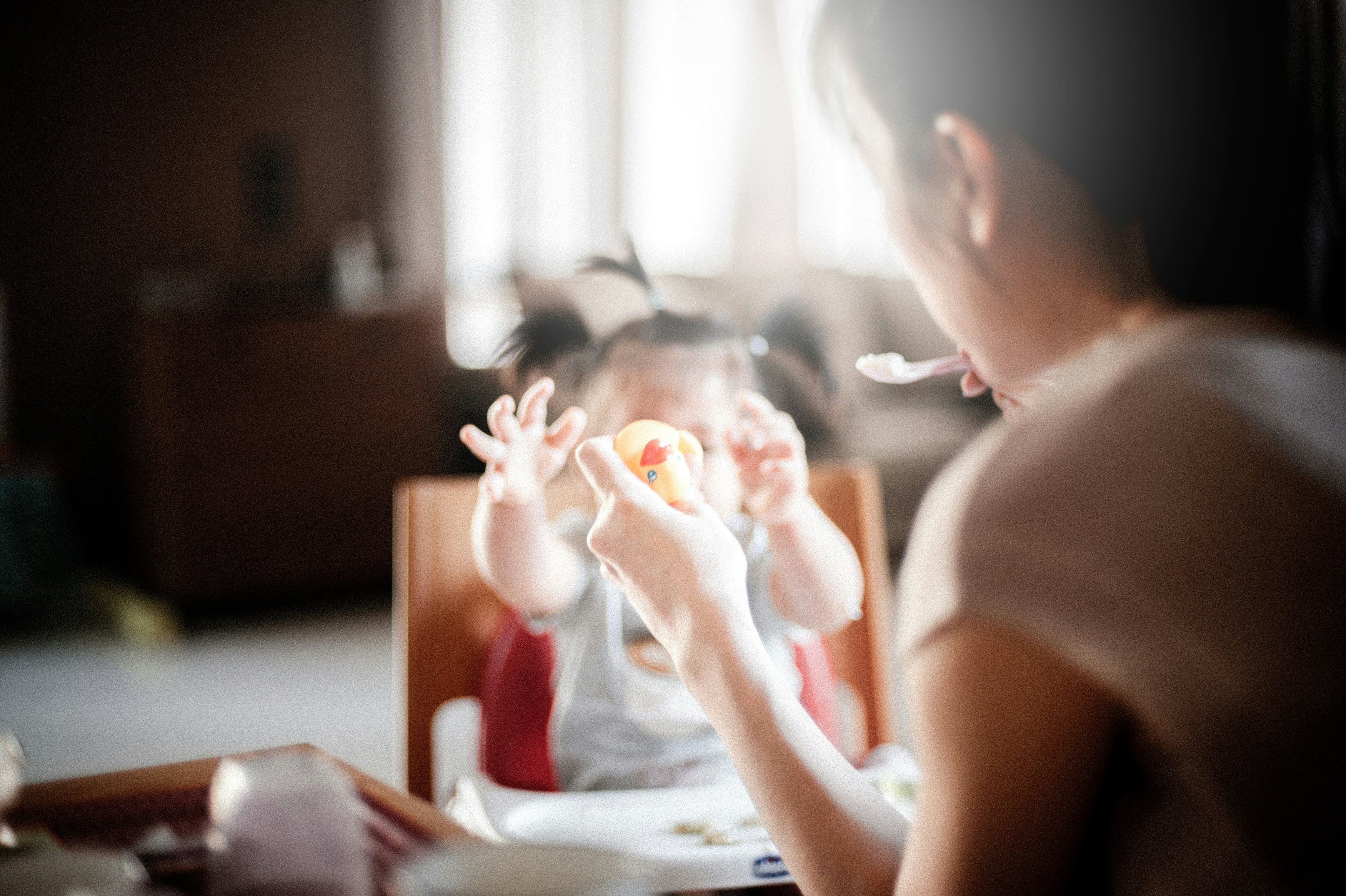
If your baby still prefers purées or seems completely uninterested in finger foods, you’re not alone. This is what our transition actually looked like, what finally helped, and what I wish someone had told me before I spent weeks worrying.
If You’re Here Because Your Baby Won’t Eat Finger Foods…
I know how frustrating this stage can feel because I was there too.
When I pictured starting solids, I imagined our baby gradually working through different textures until one day she was happily eating little pieces of fruit, scrambled eggs, toast, and whatever we happened to be having for dinner. Instead, we seemed to hit a wall. She was perfectly happy with yogurt, oatmeal, and purées, but every time I offered finger foods they were either ignored, squished between tiny fingers, or dropped on the floor.
At first I told myself it was normal. Then a few weeks went by, and I started wondering if we were falling behind.
The hardest part wasn’t actually feeding her - it was opening Instagram or TikTok and seeing babies her age happily eating full meals. Every video made it seem like there was some invisible milestone we had missed. I started questioning everything. Should I have skipped purées? Did I introduce finger foods too late? Was I supposed to be following baby-led weaning more closely?
Looking back, I wish someone had simply told me this: not every baby is excited about finger foods right away, and that doesn’t mean you’re doing anything wrong.
We Didn’t Switch Overnight - and I Think That Helped
One of the biggest misconceptions I had was that babies eventually reach a point where you throw away the purées and never look back.
That wasn’t our experience at all.
For quite a while, meals were a mix of familiar foods and opportunities to practice something new. We still served yogurt because we knew she’d eat it. We’d pair it with a few pieces of fruit or a homemade pancake, even if those came back untouched. Sometimes we’d add a pouch to the daycare bag because I knew she’d have something reliable if she wasn’t interested in anything else.
That gradual approach took a surprising amount of pressure off. Instead of feeling like every meal was some kind of test, I started looking at each one as another opportunity for exposure. If she picked up a piece of food, great. If she licked it and threw it on the floor, that still counted as progress. Even touching a new texture was part of learning.
Ironically, once I stopped expecting every meal to be a breakthrough, she started making steady progress.
The Turning Point Wasn’t What I Expected
If you had asked me before we started this stage what foods would help bridge the gap between purées and table food, I would have guessed soft foods every time. More mashed vegetables. Softer fruit. Maybe scrambled eggs.
Instead, the first foods she really became interested in were crunchy.
Not hard foods, of course, but light, dissolvable snacks that were easy to hold and changed texture quickly once she started chewing. There was something about being able to pick them up herself that seemed much more exciting than another spoonful of something smooth.
I don’t know whether it was the independence, the texture, or simply that they felt different, but it was one of the first times I felt like she was genuinely interested in feeding herself instead of just accepting whatever I put on a spoon.
That was the moment I realized progress wasn’t going to look the way I had imagined.
The Snacks We Reached For Again and Again
Once we found a few snacks she enjoyed, I stopped feeling like I had to reinvent every meal. Having a handful of reliable options made it much easier to keep introducing new foods because I knew there would almost always be something on her plate that she recognized.
The Little Spoon Kale Apple Meltable Baby Puffs quickly became our favorite. If you’ve read any of my other feeding posts, you’ll probably notice I recommend them often, and that’s simply because they’ve earned it. They’re light, easy to hold, and were one of the first crunchy foods our baby consistently picked up without hesitation.
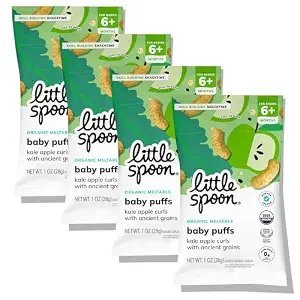
Little Spoon Kale Apple Meltable Baby Puffs
- Organic corn quinoa sorghum
- No added sugar
- No rice
- Meltable texture
Pros: Light, easy to hold, meltable - one of the first crunchy foods our baby consistently picked up. Cons: Small bags go fast when they're a fan. Best for: Babies making the leap from purées to finger foods.
We also kept Little Spoon Banana Pitaya Meltable Baby Puffs and Little Spoon Blueberry Carrot Meltable Baby Wheels in regular rotation. They offered different flavors and textures without feeling overwhelming, and daycare teachers could easily break them into smaller pieces if needed.
Little Spoon Snacks We Rotated
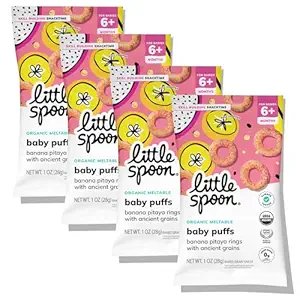
Little Spoon Banana Pitaya Meltable Baby Puffs
Different flavor same easy meltable texture
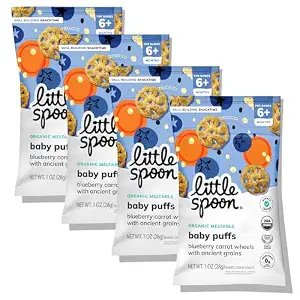
Little Spoon Blueberry Carrot Meltable Baby Wheels
Easy to break into smaller pieces for daycare
Another staple was Once Upon a Farm Organic Coconut Melts . They’re one of those products that somehow end up everywhere in our house. We keep them in the diaper bag, my purse, and the car because they’re an easy snack that travels well and our toddler still gets excited about.
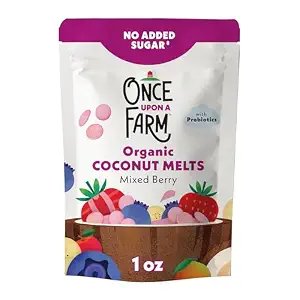
Once Upon a Farm Organic Coconut Melts
- Organic
- Dairy free
- 1oz portable bags
- No mess
Pros: Truly portable, no mess, easy to keep stashed everywhere. Cons: Goes quickly when they love them. Best for: On-the-go snacking and reliable daycare bag backup.
We also used Happy Baby Organics Teether Variety Pack quite a bit during this stage. They dissolve quickly, they’re easy to find in most grocery stores, and they were another helpful stepping stone between purées and more challenging finger foods.
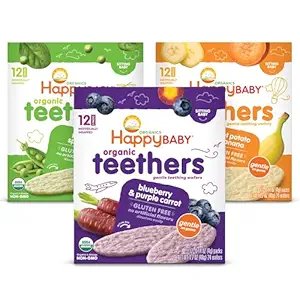
Happy Baby Organics Teether Variety Pack
- Dissolves easily
- Organic
- 3 flavor variety pack
- Widely available
Pros: Dissolves safely, easy stepping stone from purées to crunchier textures. Cons: More of an early stage snack you'll graduate from. Best for: The earliest stages of finger food practice.
None of these foods magically solved the problem overnight, but together they made practicing feel fun instead of frustrating.
What Helped Me Worry Less
Looking back, I don’t think our baby suddenly learned to eat finger foods because we found the perfect snack or followed the perfect feeding method.
She learned because we kept giving her opportunities to practice without making every meal feel high stakes.
Some days she’d ignore almost everything I put in front of her. Other days she’d surprise me by taking a few bites of something she had refused all week. Those tiny moments were easy to overlook because I was so focused on where I thought we should be.
The reality is that progress was happening the whole time. It just wasn’t happening in a straight line.
I also stopped comparing our meals to the beautifully curated ones I saw online. Those photos are inspiring, but they rarely show the food that ended up on the floor or the meals that came home from daycare untouched. Once I let go of that comparison, feeding became much more enjoyable for both of us.
If Your Baby Is Still Only Eating Purées
If you’re reading this because you packed finger foods for the third day in a row and they all came home untouched, I really hope you don’t take that as a sign that you’ve failed.
Keep offering familiar foods alongside new ones. Keep giving your baby opportunities to explore different textures, even if they only touch them or take one bite. Resist the urge to measure progress meal by meal, because that’s not how most babies learn.
Our baby eventually got there. Not because we forced it, and not because we followed one perfect method, but because we stayed consistent and gave her time.
At some point, almost without realizing it, the yogurt wasn’t the only thing disappearing from her plate anymore. The pancakes started getting eaten. Then the fruit. Then pieces of dinner. Looking back, there wasn’t one magical meal where everything changed. It happened gradually enough that I almost missed it.
Looking Back…
If I could go back to the beginning of this stage, I wouldn’t buy different products or follow a different feeding philosophy. I’d simply spend less time worrying that we were behind.
Every baby approaches food differently, and that’s something I understand much better now than I did then. Some babies dive headfirst into finger foods. Others need weeks or even months of gentle exposure before they feel ready. Neither path is wrong.
If you’re in the middle of that second group right now, I hope this gives you a little reassurance. Keep offering the food. Keep celebrating the tiny wins. Trust that your baby is learning, even when it doesn’t feel like it.
One day you’ll look down at their plate and realize they’re eating foods you once thought they’d never touch. And chances are, you won’t even remember exactly when the transition happened, you’ll just realize you made it.